For hospitals and clinics
Arrive informed.
Treat with context.
The Lyvra Workstation brings a patient’s authorized history into the consultation: longitudinal, attributed to its sources, and limited to what the patient chose to share. It works alongside the systems you already use.
Patient arrival
From the waiting room to the right context in moments.
Access begins with the patient. There is no search across patients and no standing access to anyone’s record.
The patient arrives
They choose what to share, why and for how long, and show a short-lived code.
Consent is verified
The Workstation redeems the code. The server checks the authorization on every request.
A bounded session
The clinician works with the shared record for a limited time; the patient can end it at any moment.
The Workstation
Built for the way clinicians read a history.
Visits with their orders, results, prescriptions and notes in time order. Results charted over time with the reference ranges the laboratories reported. Imaging history and every shared document.
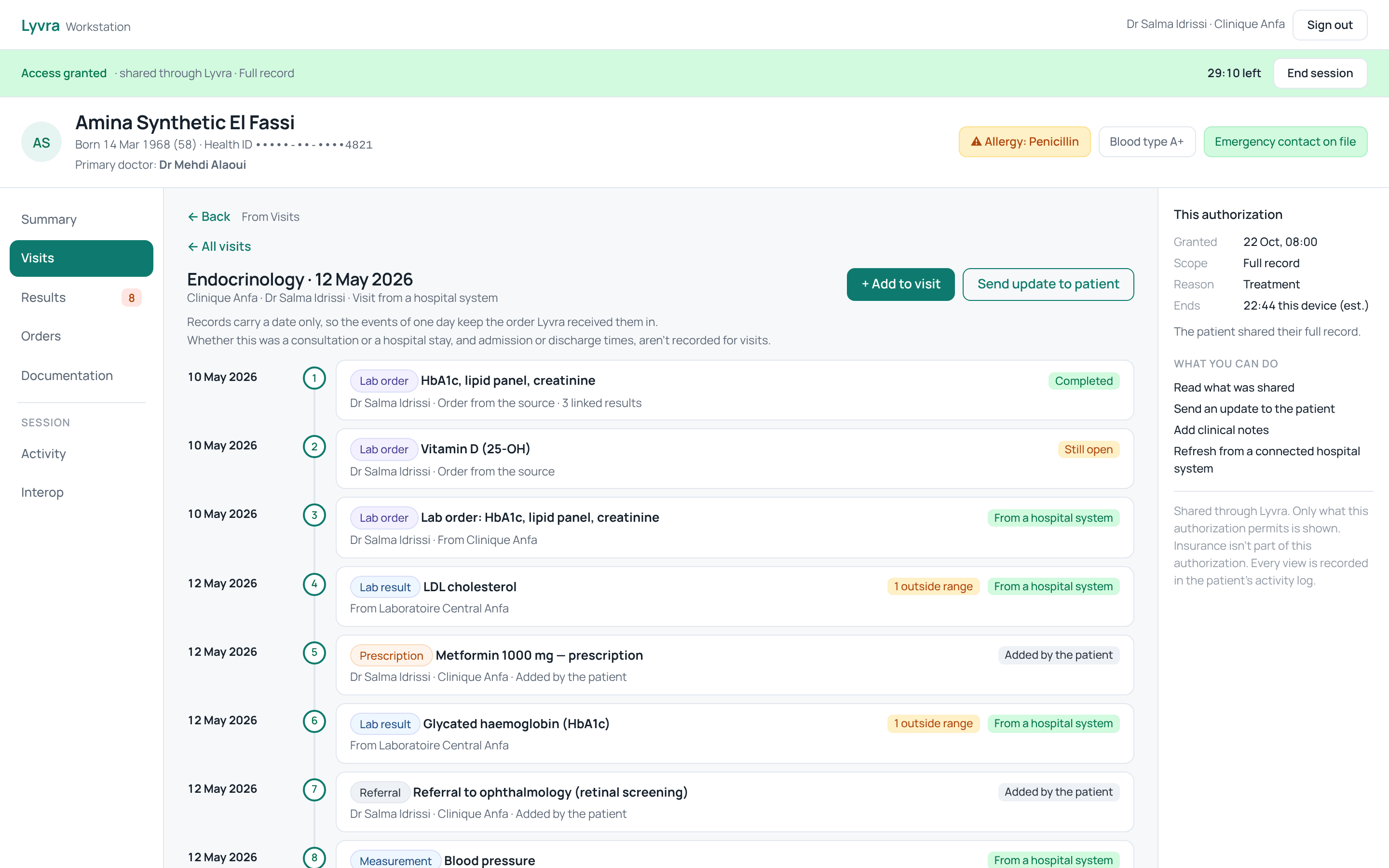
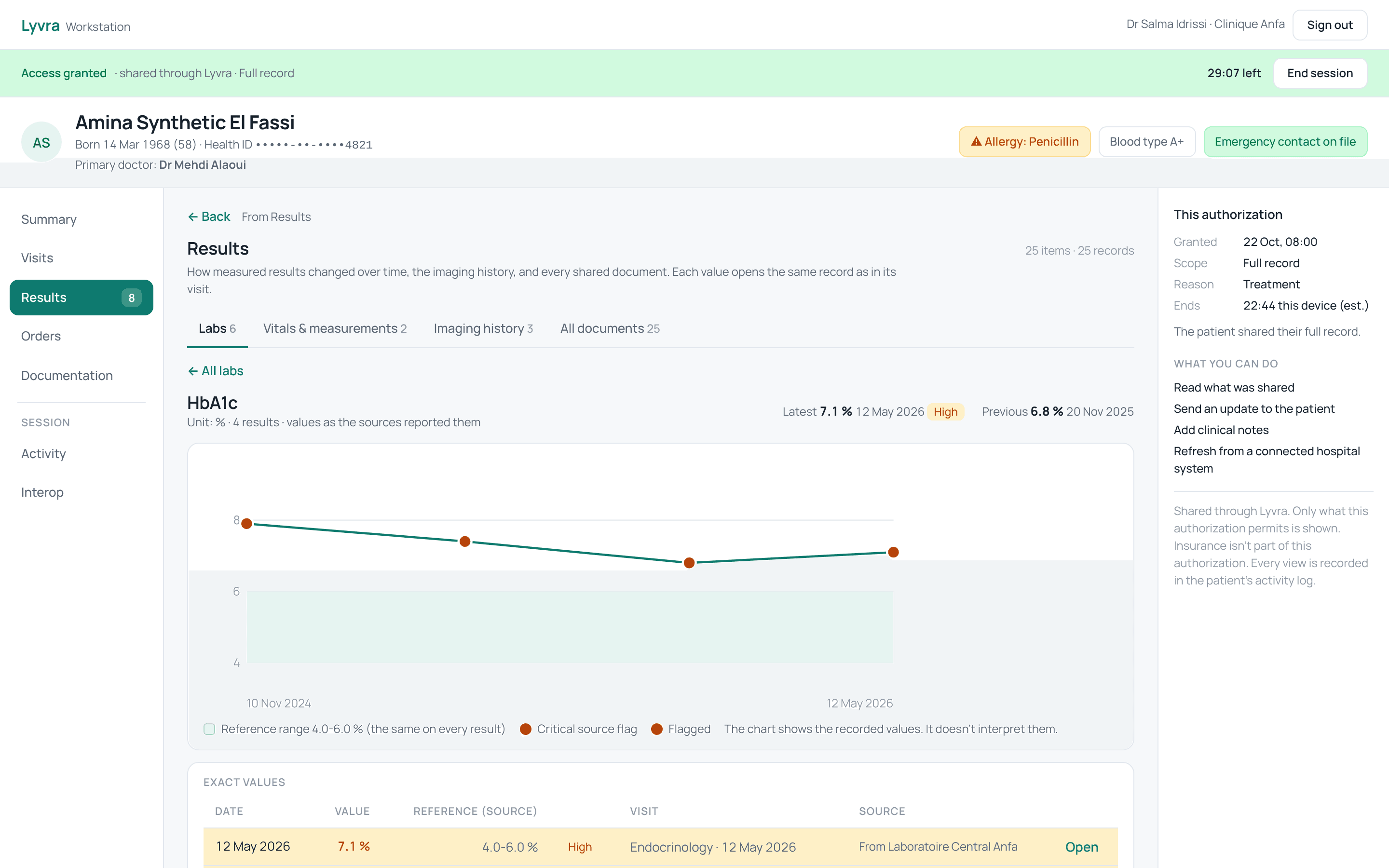
Results over time, with each value’s source and reference range.
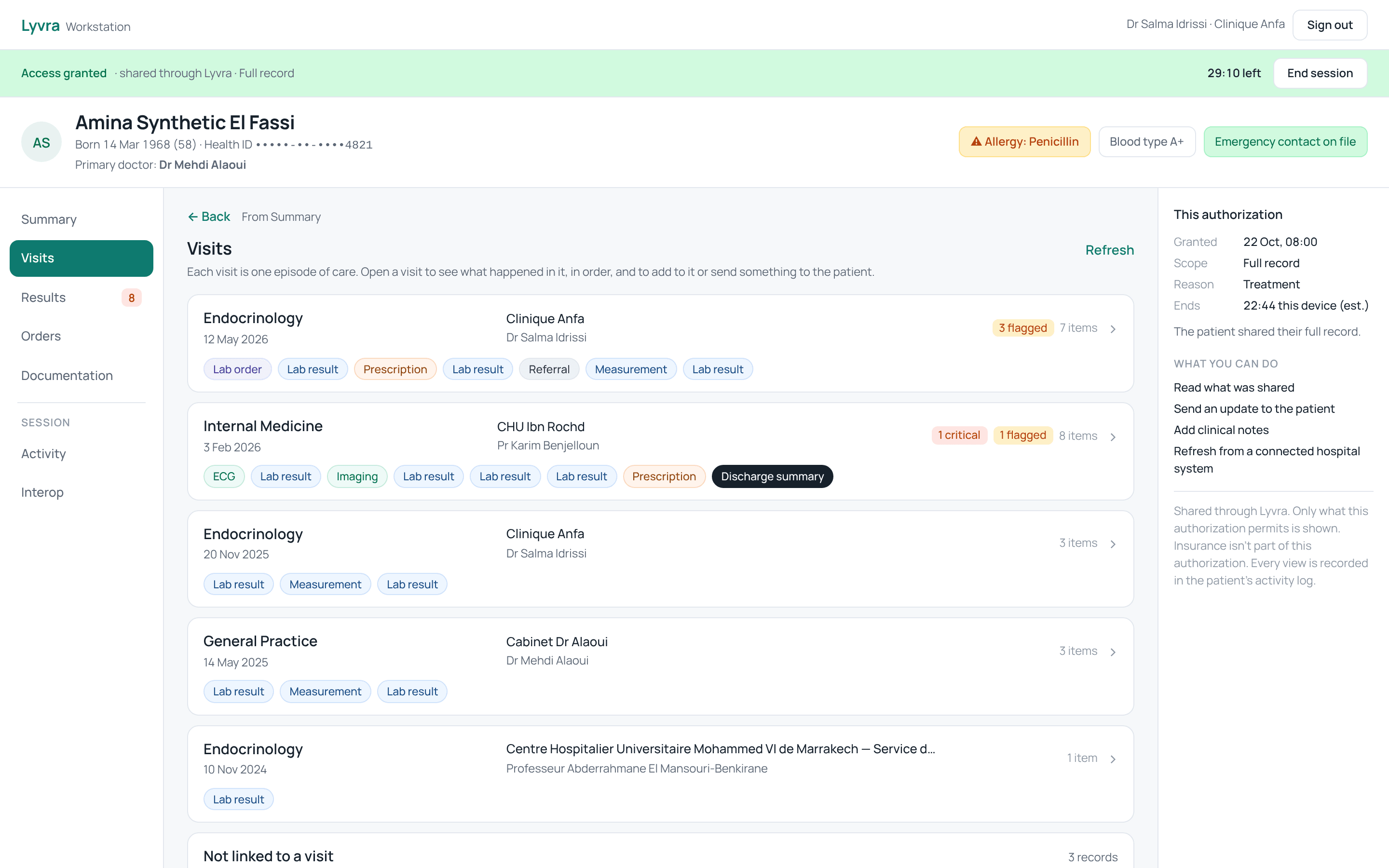
Visits across sources, each with its events.
Provenance
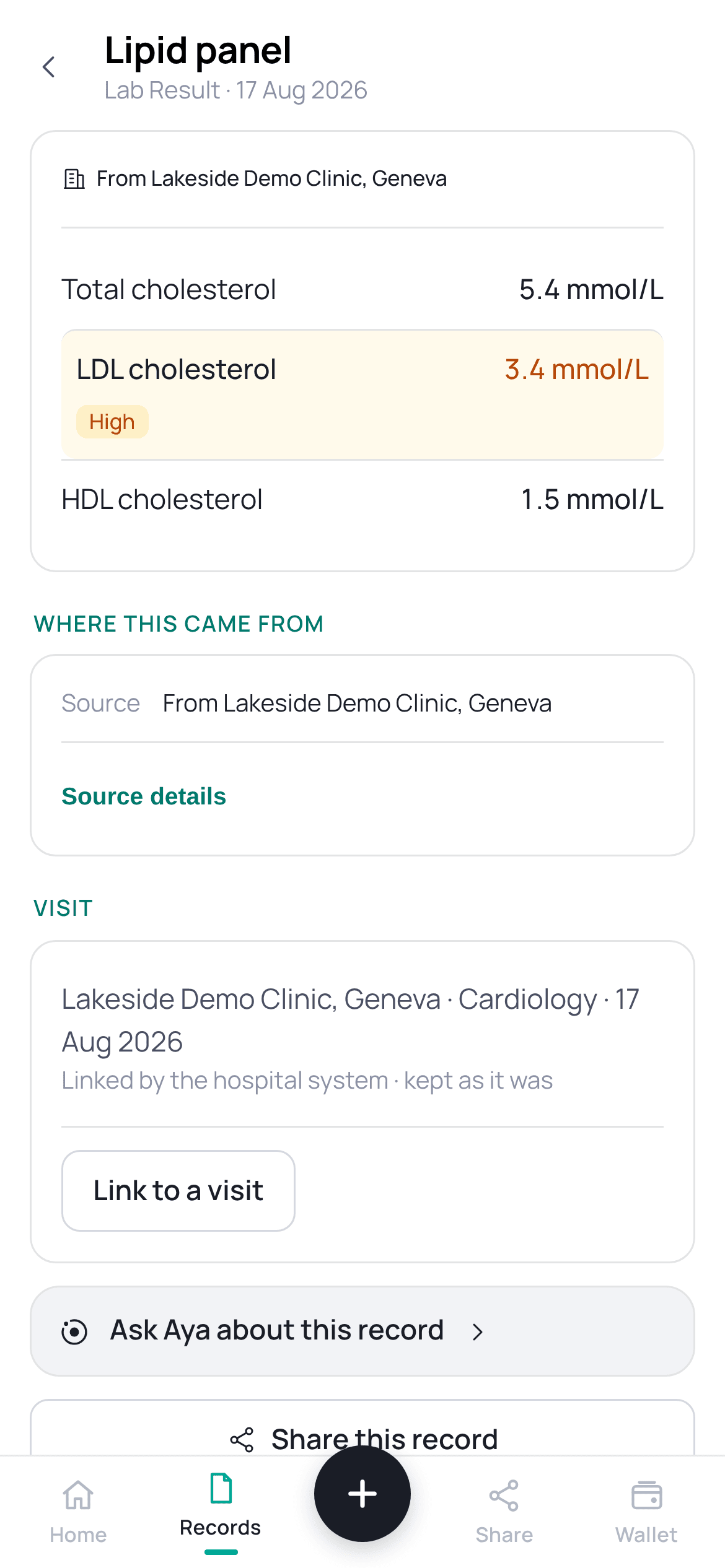
Know where every value came from.
Each record carries its source: the hospital system, laboratory or patient upload it came from. Flags appear exactly as the source reported them; Lyvra does not reinterpret results.
- Source on every record
- Reference ranges as reported
- Patient uploads clearly distinguished
Interoperability
Standards-based, not another silo.
Lyvra is built on FHIR R4. With the patient’s permission it connects to hospital systems through standard SMART on FHIR interfaces, normalises what it receives into one canonical model, and keeps the provenance of each item.
- FHIR R4 and SMART on FHIR
- One canonical clinical model across sources
- Integration designed with each pilot site
Audit and updates
Every view recorded. Every update attributed.
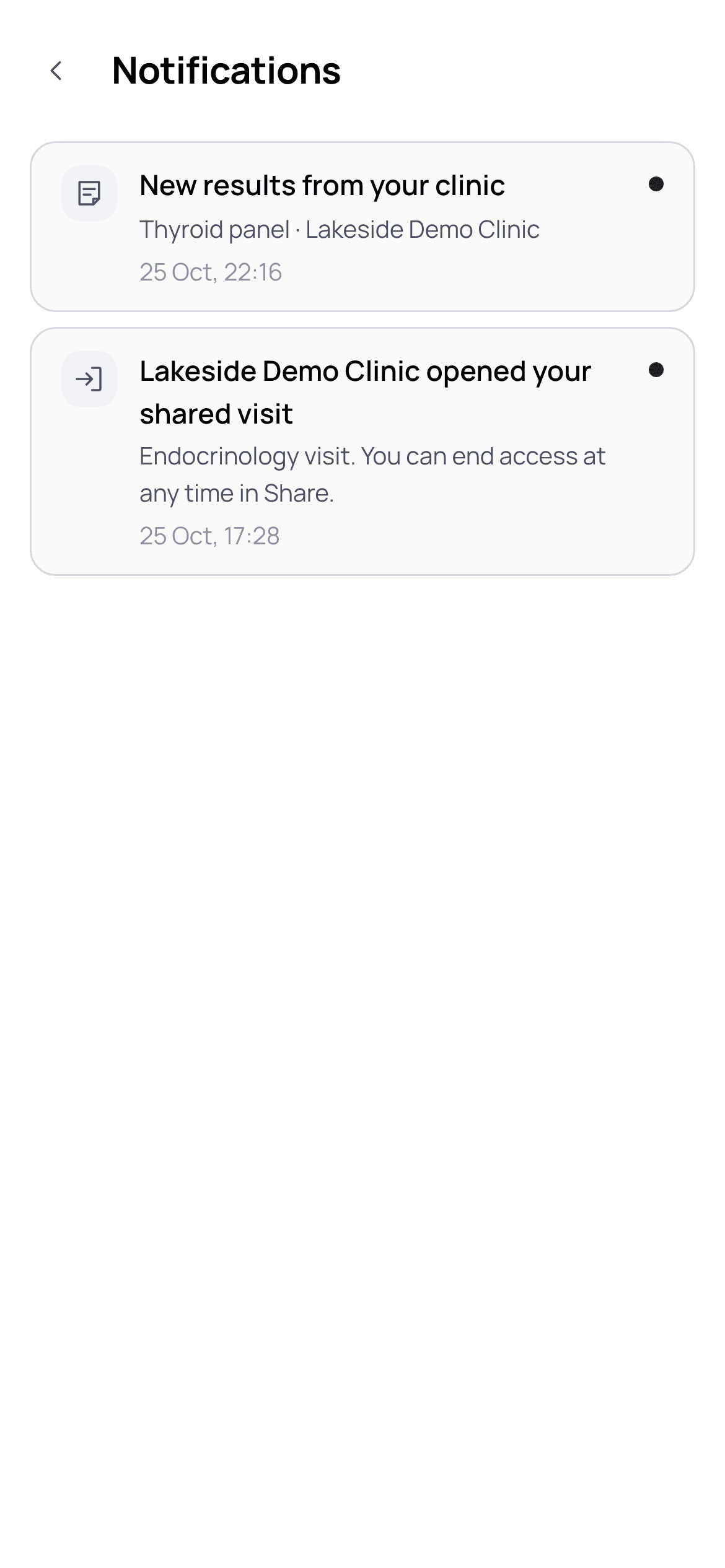
Each access is written to the patient’s activity log. Clinicians can send an update back to the patient and keep internal notes within their own institution.
- Patient-visible access log
- Updates sent back to the patient’s record
- Internal notes stay with your institution
Lyvra complements existing clinical systems by bringing patient-authorized context into the care journey. It does not replace your EHR.
Discuss integrationPilot
Start with one department or patient group, with defined goals and a clear integration scope.
Integrate
Connect your systems through standard interfaces, designed with your IT and clinical teams.
Scale
Extend to more departments, sites and the patients who move between them.
Lyvra Health
Bring patient-authorized context into your care journey.
Lyvra is preparing for its first institutional pilots. Talk to us about yours.